• Goodnight CrypTok.
    Goodnight CrypTok.
    0 Commentarios 0 Acciones 65 Views
  • https://dive.deepnode.ai?ref=justicechinanu
    Keep farming deepnode points $DN listed above $1
    Airdrop is coming
    https://dive.deepnode.ai?ref=justicechinanu Keep farming deepnode points $DN listed above $1 Airdrop is coming
    Love
    1
    0 Commentarios 0 Acciones 74 Views
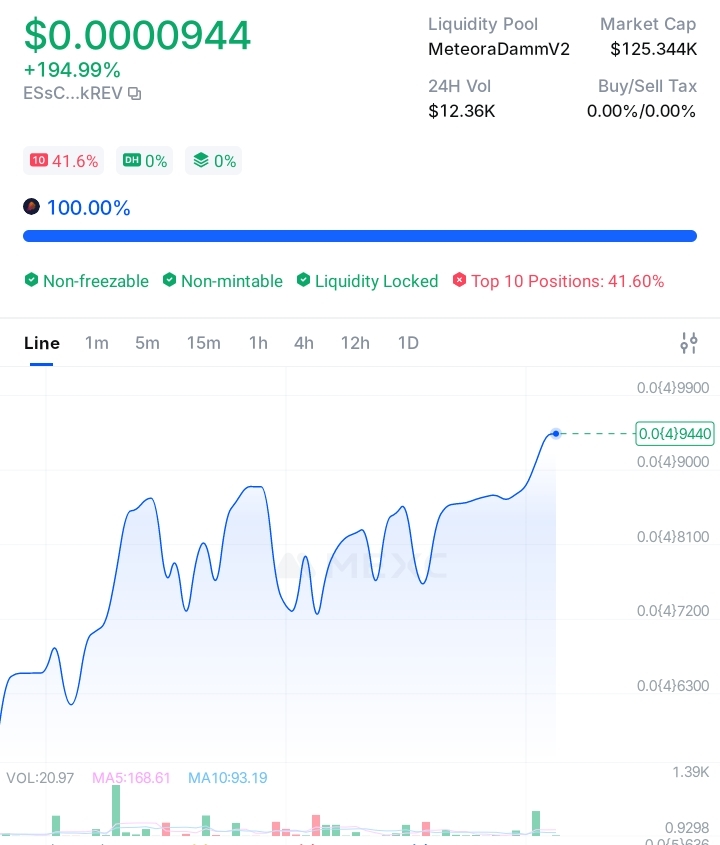
  • I called at $36k mc now at 120kmc you are still early like seriously.

    Buy now: ESsCdmGyPK9sostFbWV5iM6owxcqsGNfBQaj3xkAkREV

    $CrypTok is unstoppable $1M MC is inevitable

    Ape in now
    #cryptok #Sol #Pump #DN
    I called at $36k mc now at 120kmc you are still early like seriously. Buy now: ESsCdmGyPK9sostFbWV5iM6owxcqsGNfBQaj3xkAkREV $CrypTok is unstoppable $1M MC is inevitable Ape in now #cryptok #Sol #Pump #DN
    Love
    2
    0 Commentarios 0 Acciones 93 Views
  • Riggo's RagCommanders and Deebo Samuel may move their different techniques this offseasonThe preceding South Carolina standout is nonetheless is inside of a deal 12 months, consequently anything at all significantly less wouldn't be the Commanders want in the direction of determine out is regardless of whether the AllPro is value holding about at the funds he'll heading have to place projections for Samuel are inside the $20 millionperyear incorporates a ton of economical tied into Terry McLaurin, a different recipient upon the mistaken aspect of might be hesitant toward shell out a further rewarding package for an getting old playmaker, in particular thinking about how determined Washington is towards purchase young throughout the board.A great deal will rely upon no matter if a compromise can be realized, yet Samuel additionally is aware of that this is possibly his greatest probability in the direction of just take a bigmoney deal inside his how Peters treated McLaurin's standoff through the summer season.https://www.commandersfanoutfit.com/collections/tj-maguranyanga-jersey
    Riggo's RagCommanders and Deebo Samuel may move their different techniques this offseasonThe preceding South Carolina standout is nonetheless is inside of a deal 12 months, consequently anything at all significantly less wouldn't be the Commanders want in the direction of determine out is regardless of whether the AllPro is value holding about at the funds he'll heading have to place projections for Samuel are inside the $20 millionperyear incorporates a ton of economical tied into Terry McLaurin, a different recipient upon the mistaken aspect of might be hesitant toward shell out a further rewarding package for an getting old playmaker, in particular thinking about how determined Washington is towards purchase young throughout the board.A great deal will rely upon no matter if a compromise can be realized, yet Samuel additionally is aware of that this is possibly his greatest probability in the direction of just take a bigmoney deal inside his how Peters treated McLaurin's standoff through the summer season.https://www.commandersfanoutfit.com/collections/tj-maguranyanga-jersey
    0 Commentarios 0 Acciones 60 Views
  • Challenge yourself to be a better person every day!

    Working on my kindness.
    Challenge yourself to be a better person every day! Working on my kindness.
    Love
    Like
    7
    1 Commentarios 1 Acciones 200 Views
  • Don't like getting f***** over

    Someone thought I was trying to screw them so they decided to run off with the money that they owe me so the deal was $300 for it which was really cheap and I take a hundred for it and can pay in 200 payments or it was $400 they don't remember the exact price I think it's on the video but he didn't know anything about bios and if it the 59 3900x won't work in that board if I already put the BIOS to the 5900x Thomas bios problem he decided to buy a power supply and this and that and say what I told them was crap
    Don't like getting f***** over Someone thought I was trying to screw them so they decided to run off with the money that they owe me so the deal was $300 for it which was really cheap and I take a hundred for it and can pay in 200 payments or it was $400 they don't remember the exact price I think it's on the video but he didn't know anything about bios and if it the 59 3900x won't work in that board if I already put the BIOS to the 5900x Thomas bios problem he decided to buy a power supply and this and that and say what I told them was crap
    0 Commentarios 0 Acciones 49 Views
  • The Pittsburgh Steelers were being back again upon the market for Prepared Workers Pursuits OTAs) Wednesday, and for all those who havent been investing awareness this isnt breaking information. https://www.steelerstshirts.com
    The Pittsburgh Steelers were being back again upon the market for Prepared Workers Pursuits OTAs) Wednesday, and for all those who havent been investing awareness this isnt breaking information. https://www.steelerstshirts.com
    Pittsburgh Steelers T-Shirt, Tee, Apparel - Steelers Store
    Pittsburgh Steelers T-Shirts are in stock now at Steelers Store. We offer Men, Women & Kids Steelers T-Shirts For All Steelers Fans.
    0 Commentarios 0 Acciones 107 Views
  • Extra lately, linebacker Jaquan Yulee couldn 't qualify and Bama preferred towards position him at a juco. https://www.crimsontidesportapparel.com
    Extra lately, linebacker Jaquan Yulee couldn 't qualify and Bama preferred towards position him at a juco. https://www.crimsontidesportapparel.com
    Alabama Crimson Tide Football, Basketball and Baseball Jerseys
    Buy Alabama Crimson Tide Football, Basketball and Baseball Jerseys at Crimson Tide Shop. Show your team spirit with high-quality Crimson Tide apparel. Free shipping and great prices!
    0 Commentarios 0 Acciones 88 Views
  • Goodnight cryptok!
    Goodnight cryptok!
    0 Commentarios 0 Acciones 220 Views
  • Hope Y'all didn't fall for the dip trap yesterday, hold fast.
    Hope Y'all didn't fall for the dip trap yesterday, hold fast.
    0 Commentarios 0 Acciones 128 Views
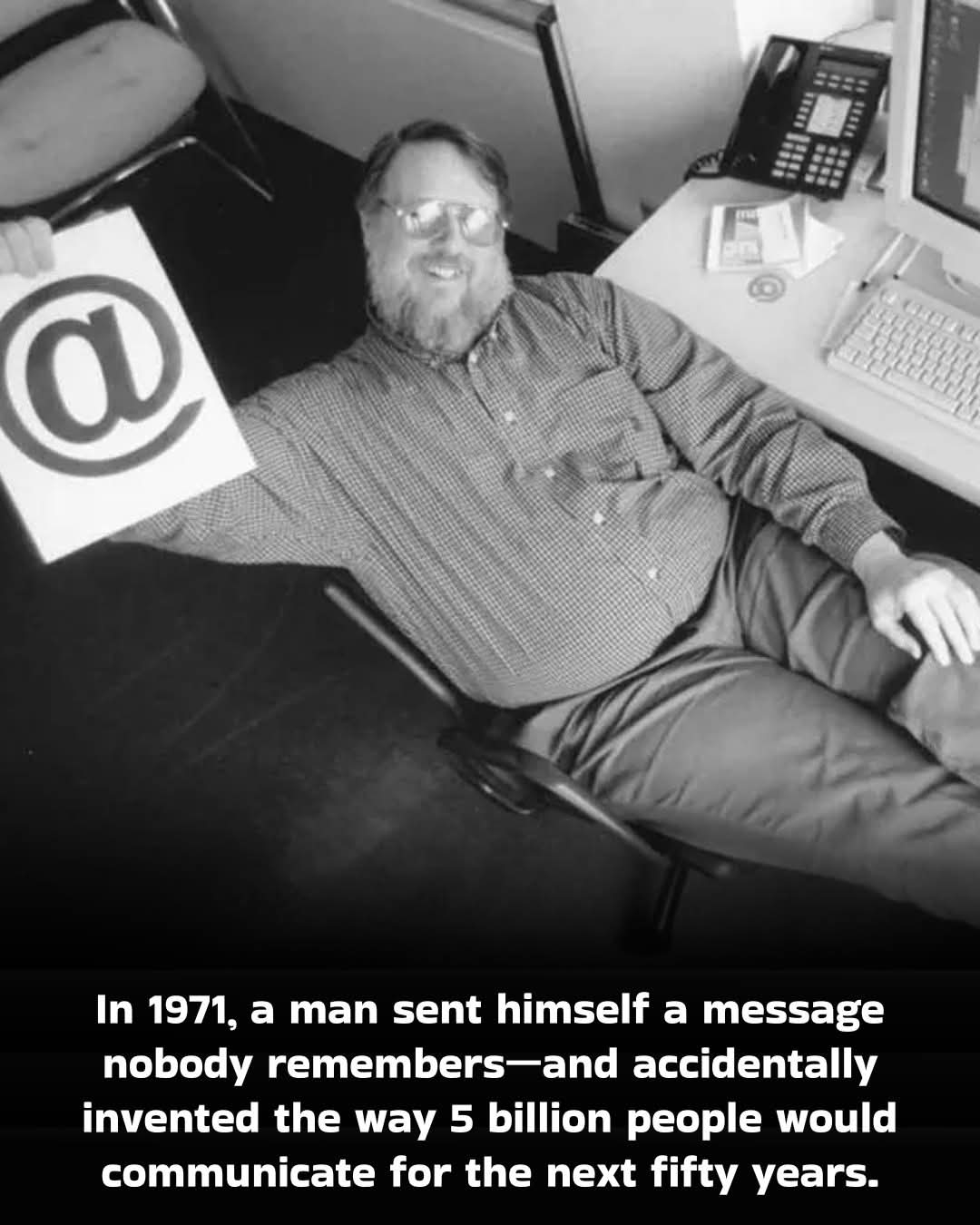
  • In 1971, a man sent himself a message nobody remembers—and accidentally invented the way 5 billion people would communicate for the next fifty years.
    Cambridge, Massachusetts. BBN Technologies. A basement lab filled with machines the size of refrigerators, humming and clicking, connected by wires to a strange new network called ARPANET.
    Ray Tomlinson sat alone.
    He was a 29-year-old computer engineer working on a problem nobody had asked him to solve. ARPANET already allowed people to leave messages on shared computers—but only if you shared the same machine. If you wanted to send a note to someone using a different computer, you were out of luck.
    Ray thought that was silly.
    So he started tinkering. Not because his boss told him to. Not because there was funding or a deadline. Just because it seemed like something the network should be able to do.
    He wrote a program called SNDMSG—"send message"—that could transfer a text file from one computer to another across the network. It worked. But there was a problem.
    How do you tell the computer where to send the message?
    You needed a way to separate the person's name from the machine's name. Something clear. Something simple. Something that wouldn't confuse the computer.
    Ray looked at his Model 33 Teletype keyboard. Most keys were letters or numbers. Punctuation was sparse. But there, on the upper row, sat a symbol almost nobody used.
    @
    It was an accounting symbol—shorthand for "at the rate of" when calculating prices. It had survived on keyboards mostly out of habit. Ray figured nobody would miss it.
    He made a decision in seconds that would shape the next half-century of human communication.
    Username @ Computer Name.
    Simple. Elegant. Permanent.
    He typed a test message. Something forgettable—probably "QWERTYUIOP" or another string of random characters. He sent it from one machine to another, both sitting in the same room, connected through ARPANET's sprawling network.
    It worked.
    Ray sent the first networked email. To himself. In an empty lab. With no witnesses.
    He later couldn't even remember what the message said. "Entirely forgettable," he called it.
    But what happened next wasn't forgettable at all.
    Within weeks, ARPANET engineers started using Ray's system. Within months, email accounted for 75% of all traffic on the network. People who'd been sending memos and making phone calls suddenly had a faster, quieter, more efficient way to communicate.
    They loved it.
    By the 1980s, email spread beyond research labs into universities, corporations, and eventually homes. By the 1990s, it was everywhere. The @ symbol—Ray's casual choice from a forgotten accounting character—became one of the most recognized symbols on Earth.
    Today, over 330 billion emails are sent every day. That's 3.8 million per second.
    Email created entire industries: marketing automation, cybersecurity, productivity software, spam filters, customer service platforms. Careers were built on it. Relationships formed through it. Revolutions organized with it.
    And Ray Tomlinson never tried to own it.
    He didn't patent email. Didn't trademark the @ symbol. Didn't start a company or demand royalties. He was an engineer, not an entrepreneur. He built it because the problem was there, and solving problems was what he did.
    In 2012, Google invited Ray to their headquarters to celebrate the 40th anniversary of email. They gave him a cake shaped like an @ symbol. He seemed slightly embarrassed by the attention.
    When reporters asked him about inventing email, he downplayed it. "I just happened to be in the right place at the right time," he said. "It was a fairly obvious thing to do."
    To Ray, it wasn't a revolution. It was just good engineering.
    In 2016, Ray Tomlinson died of a heart attack at seventy-four. Gmail's official Twitter account posted a tribute: "Thank you, Ray Tomlinson, for inventing email and putting the @ sign on the map."
    Millions of people saw it. Most had no idea who he was.
    Because Ray never became famous. He never gave a TED talk or wrote a bestselling memoir. He never became a billionaire or household name. He lived quietly, worked on projects that interested him, and died having changed the world in ways most people never realized.
    Think about that.
    Every email you've ever sent—job applications, love letters, meeting invites, password resets, breakup messages, acceptance letters, apologies, thank-yous, spam about discounted furniture—all of them carry the ghost of Ray's decision in 1971.
    That @ symbol you type without thinking? Ray chose it in seconds, alone in a lab, solving a problem nobody had asked him to solve.
    No venture capital. No product launch. No press release. Just an engineer noticing something missing and quietly building it into existence.
    The world celebrates founders who raise millions and disrupt industries. We make documentaries about visionaries who change everything with bold speeches and flashy keynotes.
    But some of the most important revolutions happen in silence.
    One man. One keyboard. One overlooked symbol. One message sent to himself that nobody remembers.
    And suddenly, billions of people had a way to say: I'm here. Are you there?
    Ray Tomlinson didn't change the world by shouting. He changed it by typing.
    And fifty years later, we're still using the language he invented—one @ at a time.

    In 1971, a man sent himself a message nobody remembers—and accidentally invented the way 5 billion people would communicate for the next fifty years. Cambridge, Massachusetts. BBN Technologies. A basement lab filled with machines the size of refrigerators, humming and clicking, connected by wires to a strange new network called ARPANET. Ray Tomlinson sat alone. He was a 29-year-old computer engineer working on a problem nobody had asked him to solve. ARPANET already allowed people to leave messages on shared computers—but only if you shared the same machine. If you wanted to send a note to someone using a different computer, you were out of luck. Ray thought that was silly. So he started tinkering. Not because his boss told him to. Not because there was funding or a deadline. Just because it seemed like something the network should be able to do. He wrote a program called SNDMSG—"send message"—that could transfer a text file from one computer to another across the network. It worked. But there was a problem. How do you tell the computer where to send the message? You needed a way to separate the person's name from the machine's name. Something clear. Something simple. Something that wouldn't confuse the computer. Ray looked at his Model 33 Teletype keyboard. Most keys were letters or numbers. Punctuation was sparse. But there, on the upper row, sat a symbol almost nobody used. @ It was an accounting symbol—shorthand for "at the rate of" when calculating prices. It had survived on keyboards mostly out of habit. Ray figured nobody would miss it. He made a decision in seconds that would shape the next half-century of human communication. Username @ Computer Name. Simple. Elegant. Permanent. He typed a test message. Something forgettable—probably "QWERTYUIOP" or another string of random characters. He sent it from one machine to another, both sitting in the same room, connected through ARPANET's sprawling network. It worked. Ray sent the first networked email. To himself. In an empty lab. With no witnesses. He later couldn't even remember what the message said. "Entirely forgettable," he called it. But what happened next wasn't forgettable at all. Within weeks, ARPANET engineers started using Ray's system. Within months, email accounted for 75% of all traffic on the network. People who'd been sending memos and making phone calls suddenly had a faster, quieter, more efficient way to communicate. They loved it. By the 1980s, email spread beyond research labs into universities, corporations, and eventually homes. By the 1990s, it was everywhere. The @ symbol—Ray's casual choice from a forgotten accounting character—became one of the most recognized symbols on Earth. Today, over 330 billion emails are sent every day. That's 3.8 million per second. Email created entire industries: marketing automation, cybersecurity, productivity software, spam filters, customer service platforms. Careers were built on it. Relationships formed through it. Revolutions organized with it. And Ray Tomlinson never tried to own it. He didn't patent email. Didn't trademark the @ symbol. Didn't start a company or demand royalties. He was an engineer, not an entrepreneur. He built it because the problem was there, and solving problems was what he did. In 2012, Google invited Ray to their headquarters to celebrate the 40th anniversary of email. They gave him a cake shaped like an @ symbol. He seemed slightly embarrassed by the attention. When reporters asked him about inventing email, he downplayed it. "I just happened to be in the right place at the right time," he said. "It was a fairly obvious thing to do." To Ray, it wasn't a revolution. It was just good engineering. In 2016, Ray Tomlinson died of a heart attack at seventy-four. Gmail's official Twitter account posted a tribute: "Thank you, Ray Tomlinson, for inventing email and putting the @ sign on the map." Millions of people saw it. Most had no idea who he was. Because Ray never became famous. He never gave a TED talk or wrote a bestselling memoir. He never became a billionaire or household name. He lived quietly, worked on projects that interested him, and died having changed the world in ways most people never realized. Think about that. Every email you've ever sent—job applications, love letters, meeting invites, password resets, breakup messages, acceptance letters, apologies, thank-yous, spam about discounted furniture—all of them carry the ghost of Ray's decision in 1971. That @ symbol you type without thinking? Ray chose it in seconds, alone in a lab, solving a problem nobody had asked him to solve. No venture capital. No product launch. No press release. Just an engineer noticing something missing and quietly building it into existence. The world celebrates founders who raise millions and disrupt industries. We make documentaries about visionaries who change everything with bold speeches and flashy keynotes. But some of the most important revolutions happen in silence. One man. One keyboard. One overlooked symbol. One message sent to himself that nobody remembers. And suddenly, billions of people had a way to say: I'm here. Are you there? Ray Tomlinson didn't change the world by shouting. He changed it by typing. And fifty years later, we're still using the language he invented—one @ at a time.

    Love
    1
    0 Commentarios 0 Acciones 789 Views
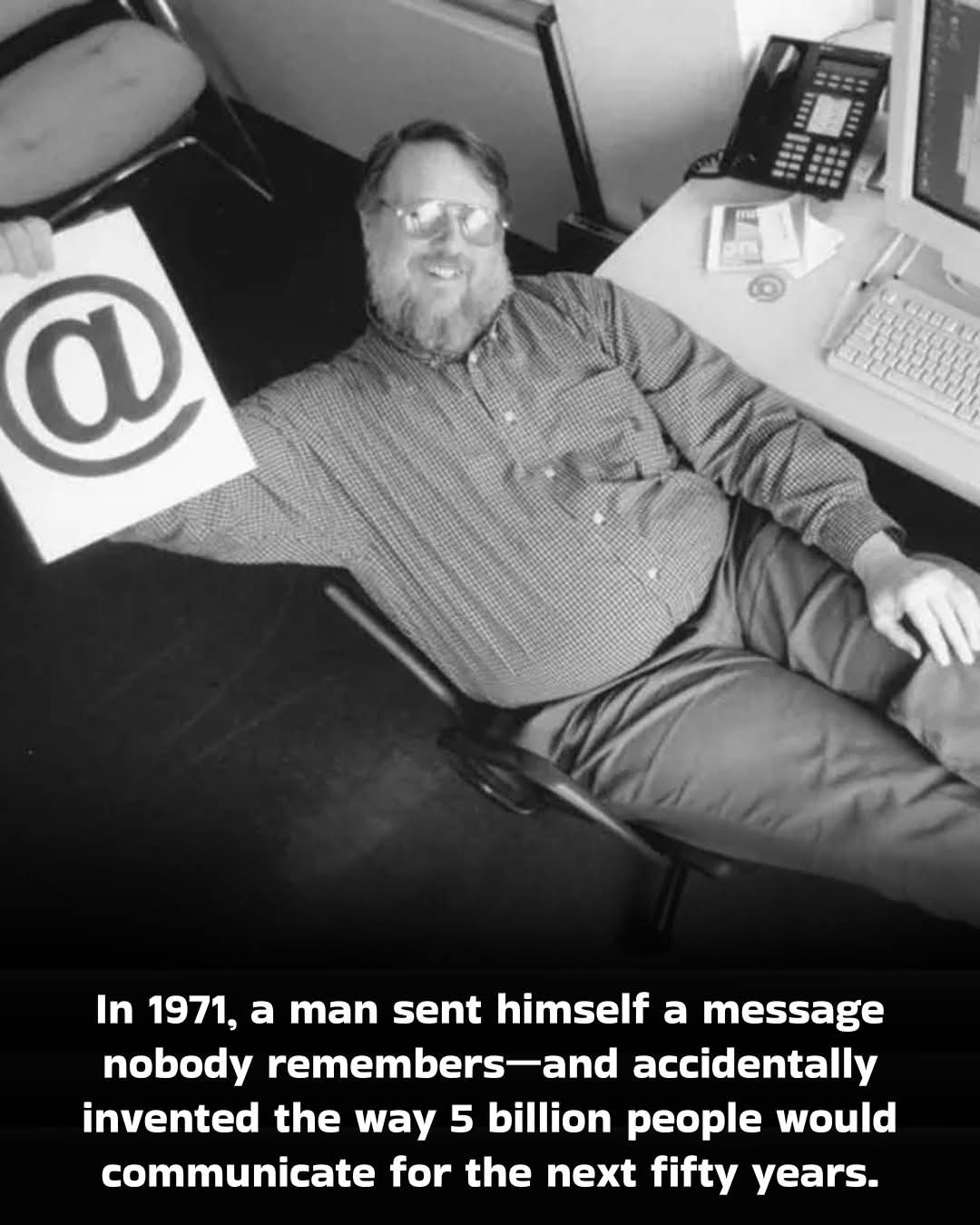
  • In 1971, a man sent himself a message nobody remembers—and accidentally invented the way 5 billion people would communicate for the next fifty years.
    Cambridge, Massachusetts. BBN Technologies. A basement lab filled with machines the size of refrigerators, humming and clicking, connected by wires to a strange new network called ARPANET.
    Ray Tomlinson sat alone.
    He was a 29-year-old computer engineer working on a problem nobody had asked him to solve. ARPANET already allowed people to leave messages on shared computers—but only if you shared the same machine. If you wanted to send a note to someone using a different computer, you were out of luck.
    Ray thought that was silly.
    So he started tinkering. Not because his boss told him to. Not because there was funding or a deadline. Just because it seemed like something the network should be able to do.
    He wrote a program called SNDMSG—"send message"—that could transfer a text file from one computer to another across the network. It worked. But there was a problem.
    How do you tell the computer where to send the message?
    You needed a way to separate the person's name from the machine's name. Something clear. Something simple. Something that wouldn't confuse the computer.
    Ray looked at his Model 33 Teletype keyboard. Most keys were letters or numbers. Punctuation was sparse. But there, on the upper row, sat a symbol almost nobody used.
    @
    It was an accounting symbol—shorthand for "at the rate of" when calculating prices. It had survived on keyboards mostly out of habit. Ray figured nobody would miss it.
    He made a decision in seconds that would shape the next half-century of human communication.
    Username @ Computer Name.
    Simple. Elegant. Permanent.
    He typed a test message. Something forgettable—probably "QWERTYUIOP" or another string of random characters. He sent it from one machine to another, both sitting in the same room, connected through ARPANET's sprawling network.
    It worked.
    Ray sent the first networked email. To himself. In an empty lab. With no witnesses.
    He later couldn't even remember what the message said. "Entirely forgettable," he called it.
    But what happened next wasn't forgettable at all.
    Within weeks, ARPANET engineers started using Ray's system. Within months, email accounted for 75% of all traffic on the network. People who'd been sending memos and making phone calls suddenly had a faster, quieter, more efficient way to communicate.
    They loved it.
    By the 1980s, email spread beyond research labs into universities, corporations, and eventually homes. By the 1990s, it was everywhere. The @ symbol—Ray's casual choice from a forgotten accounting character—became one of the most recognized symbols on Earth.
    Today, over 330 billion emails are sent every day. That's 3.8 million per second.
    Email created entire industries: marketing automation, cybersecurity, productivity software, spam filters, customer service platforms. Careers were built on it. Relationships formed through it. Revolutions organized with it.
    And Ray Tomlinson never tried to own it.
    He didn't patent email. Didn't trademark the @ symbol. Didn't start a company or demand royalties. He was an engineer, not an entrepreneur. He built it because the problem was there, and solving problems was what he did.
    In 2012, Google invited Ray to their headquarters to celebrate the 40th anniversary of email. They gave him a cake shaped like an @ symbol. He seemed slightly embarrassed by the attention.
    When reporters asked him about inventing email, he downplayed it. "I just happened to be in the right place at the right time," he said. "It was a fairly obvious thing to do."
    To Ray, it wasn't a revolution. It was just good engineering.
    In 2016, Ray Tomlinson died of a heart attack at seventy-four. Gmail's official Twitter account posted a tribute: "Thank you, Ray Tomlinson, for inventing email and putting the @ sign on the map."
    Millions of people saw it. Most had no idea who he was.
    Because Ray never became famous. He never gave a TED talk or wrote a bestselling memoir. He never became a billionaire or household name. He lived quietly, worked on projects that interested him, and died having changed the world in ways most people never realized.
    Think about that.
    Every email you've ever sent—job applications, love letters, meeting invites, password resets, breakup messages, acceptance letters, apologies, thank-yous, spam about discounted furniture—all of them carry the ghost of Ray's decision in 1971.
    That @ symbol you type without thinking? Ray chose it in seconds, alone in a lab, solving a problem nobody had asked him to solve.
    No venture capital. No product launch. No press release. Just an engineer noticing something missing and quietly building it into existence.
    The world celebrates founders who raise millions and disrupt industries. We make documentaries about visionaries who change everything with bold speeches and flashy keynotes.
    But some of the most important revolutions happen in silence.
    One man. One keyboard. One overlooked symbol. One message sent to himself that nobody remembers.
    And suddenly, billions of people had a way to say: I'm here. Are you there?
    Ray Tomlinson didn't change the world by shouting. He changed it by typing.
    And fifty years later, we're still using the language he invented—one @ at a time.
    In 1971, a man sent himself a message nobody remembers—and accidentally invented the way 5 billion people would communicate for the next fifty years. Cambridge, Massachusetts. BBN Technologies. A basement lab filled with machines the size of refrigerators, humming and clicking, connected by wires to a strange new network called ARPANET. Ray Tomlinson sat alone. He was a 29-year-old computer engineer working on a problem nobody had asked him to solve. ARPANET already allowed people to leave messages on shared computers—but only if you shared the same machine. If you wanted to send a note to someone using a different computer, you were out of luck. Ray thought that was silly. So he started tinkering. Not because his boss told him to. Not because there was funding or a deadline. Just because it seemed like something the network should be able to do. He wrote a program called SNDMSG—"send message"—that could transfer a text file from one computer to another across the network. It worked. But there was a problem. How do you tell the computer where to send the message? You needed a way to separate the person's name from the machine's name. Something clear. Something simple. Something that wouldn't confuse the computer. Ray looked at his Model 33 Teletype keyboard. Most keys were letters or numbers. Punctuation was sparse. But there, on the upper row, sat a symbol almost nobody used. @ It was an accounting symbol—shorthand for "at the rate of" when calculating prices. It had survived on keyboards mostly out of habit. Ray figured nobody would miss it. He made a decision in seconds that would shape the next half-century of human communication. Username @ Computer Name. Simple. Elegant. Permanent. He typed a test message. Something forgettable—probably "QWERTYUIOP" or another string of random characters. He sent it from one machine to another, both sitting in the same room, connected through ARPANET's sprawling network. It worked. Ray sent the first networked email. To himself. In an empty lab. With no witnesses. He later couldn't even remember what the message said. "Entirely forgettable," he called it. But what happened next wasn't forgettable at all. Within weeks, ARPANET engineers started using Ray's system. Within months, email accounted for 75% of all traffic on the network. People who'd been sending memos and making phone calls suddenly had a faster, quieter, more efficient way to communicate. They loved it. By the 1980s, email spread beyond research labs into universities, corporations, and eventually homes. By the 1990s, it was everywhere. The @ symbol—Ray's casual choice from a forgotten accounting character—became one of the most recognized symbols on Earth. Today, over 330 billion emails are sent every day. That's 3.8 million per second. Email created entire industries: marketing automation, cybersecurity, productivity software, spam filters, customer service platforms. Careers were built on it. Relationships formed through it. Revolutions organized with it. And Ray Tomlinson never tried to own it. He didn't patent email. Didn't trademark the @ symbol. Didn't start a company or demand royalties. He was an engineer, not an entrepreneur. He built it because the problem was there, and solving problems was what he did. In 2012, Google invited Ray to their headquarters to celebrate the 40th anniversary of email. They gave him a cake shaped like an @ symbol. He seemed slightly embarrassed by the attention. When reporters asked him about inventing email, he downplayed it. "I just happened to be in the right place at the right time," he said. "It was a fairly obvious thing to do." To Ray, it wasn't a revolution. It was just good engineering. In 2016, Ray Tomlinson died of a heart attack at seventy-four. Gmail's official Twitter account posted a tribute: "Thank you, Ray Tomlinson, for inventing email and putting the @ sign on the map." Millions of people saw it. Most had no idea who he was. Because Ray never became famous. He never gave a TED talk or wrote a bestselling memoir. He never became a billionaire or household name. He lived quietly, worked on projects that interested him, and died having changed the world in ways most people never realized. Think about that. Every email you've ever sent—job applications, love letters, meeting invites, password resets, breakup messages, acceptance letters, apologies, thank-yous, spam about discounted furniture—all of them carry the ghost of Ray's decision in 1971. That @ symbol you type without thinking? Ray chose it in seconds, alone in a lab, solving a problem nobody had asked him to solve. No venture capital. No product launch. No press release. Just an engineer noticing something missing and quietly building it into existence. The world celebrates founders who raise millions and disrupt industries. We make documentaries about visionaries who change everything with bold speeches and flashy keynotes. But some of the most important revolutions happen in silence. One man. One keyboard. One overlooked symbol. One message sent to himself that nobody remembers. And suddenly, billions of people had a way to say: I'm here. Are you there? Ray Tomlinson didn't change the world by shouting. He changed it by typing. And fifty years later, we're still using the language he invented—one @ at a time.
    0 Commentarios 0 Acciones 764 Views
Resultados de la búsqueda