• #hustle #sellitall #slayallday #fyp #sold #Internationalsemigrill #truckdrivers
    #hustle #sellitall #slayallday #fyp #sold #Internationalsemigrill #truckdrivers
    0 Reacties 0 aandelen 877 Views
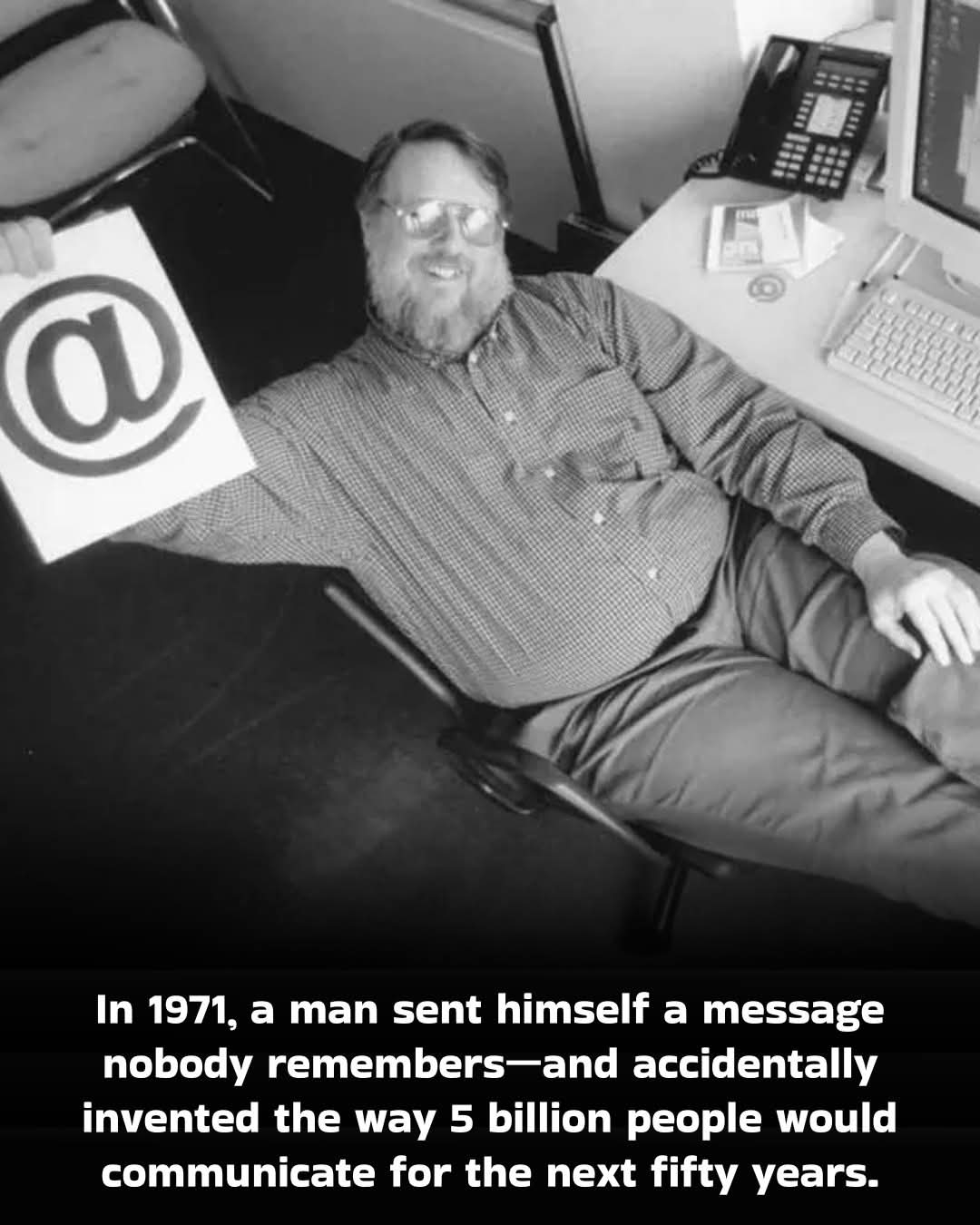
  • In 1971, a man sent himself a message nobody remembers—and accidentally invented the way 5 billion people would communicate for the next fifty years.
    Cambridge, Massachusetts. BBN Technologies. A basement lab filled with machines the size of refrigerators, humming and clicking, connected by wires to a strange new network called ARPANET.
    Ray Tomlinson sat alone.
    He was a 29-year-old computer engineer working on a problem nobody had asked him to solve. ARPANET already allowed people to leave messages on shared computers—but only if you shared the same machine. If you wanted to send a note to someone using a different computer, you were out of luck.
    Ray thought that was silly.
    So he started tinkering. Not because his boss told him to. Not because there was funding or a deadline. Just because it seemed like something the network should be able to do.
    He wrote a program called SNDMSG—"send message"—that could transfer a text file from one computer to another across the network. It worked. But there was a problem.
    How do you tell the computer where to send the message?
    You needed a way to separate the person's name from the machine's name. Something clear. Something simple. Something that wouldn't confuse the computer.
    Ray looked at his Model 33 Teletype keyboard. Most keys were letters or numbers. Punctuation was sparse. But there, on the upper row, sat a symbol almost nobody used.
    @
    It was an accounting symbol—shorthand for "at the rate of" when calculating prices. It had survived on keyboards mostly out of habit. Ray figured nobody would miss it.
    He made a decision in seconds that would shape the next half-century of human communication.
    Username @ Computer Name.
    Simple. Elegant. Permanent.
    He typed a test message. Something forgettable—probably "QWERTYUIOP" or another string of random characters. He sent it from one machine to another, both sitting in the same room, connected through ARPANET's sprawling network.
    It worked.
    Ray sent the first networked email. To himself. In an empty lab. With no witnesses.
    He later couldn't even remember what the message said. "Entirely forgettable," he called it.
    But what happened next wasn't forgettable at all.
    Within weeks, ARPANET engineers started using Ray's system. Within months, email accounted for 75% of all traffic on the network. People who'd been sending memos and making phone calls suddenly had a faster, quieter, more efficient way to communicate.
    They loved it.
    By the 1980s, email spread beyond research labs into universities, corporations, and eventually homes. By the 1990s, it was everywhere. The @ symbol—Ray's casual choice from a forgotten accounting character—became one of the most recognized symbols on Earth.
    Today, over 330 billion emails are sent every day. That's 3.8 million per second.
    Email created entire industries: marketing automation, cybersecurity, productivity software, spam filters, customer service platforms. Careers were built on it. Relationships formed through it. Revolutions organized with it.
    And Ray Tomlinson never tried to own it.
    He didn't patent email. Didn't trademark the @ symbol. Didn't start a company or demand royalties. He was an engineer, not an entrepreneur. He built it because the problem was there, and solving problems was what he did.
    In 2012, Google invited Ray to their headquarters to celebrate the 40th anniversary of email. They gave him a cake shaped like an @ symbol. He seemed slightly embarrassed by the attention.
    When reporters asked him about inventing email, he downplayed it. "I just happened to be in the right place at the right time," he said. "It was a fairly obvious thing to do."
    To Ray, it wasn't a revolution. It was just good engineering.
    In 2016, Ray Tomlinson died of a heart attack at seventy-four. Gmail's official Twitter account posted a tribute: "Thank you, Ray Tomlinson, for inventing email and putting the @ sign on the map."
    Millions of people saw it. Most had no idea who he was.
    Because Ray never became famous. He never gave a TED talk or wrote a bestselling memoir. He never became a billionaire or household name. He lived quietly, worked on projects that interested him, and died having changed the world in ways most people never realized.
    Think about that.
    Every email you've ever sent—job applications, love letters, meeting invites, password resets, breakup messages, acceptance letters, apologies, thank-yous, spam about discounted furniture—all of them carry the ghost of Ray's decision in 1971.
    That @ symbol you type without thinking? Ray chose it in seconds, alone in a lab, solving a problem nobody had asked him to solve.
    No venture capital. No product launch. No press release. Just an engineer noticing something missing and quietly building it into existence.
    The world celebrates founders who raise millions and disrupt industries. We make documentaries about visionaries who change everything with bold speeches and flashy keynotes.
    But some of the most important revolutions happen in silence.
    One man. One keyboard. One overlooked symbol. One message sent to himself that nobody remembers.
    And suddenly, billions of people had a way to say: I'm here. Are you there?
    Ray Tomlinson didn't change the world by shouting. He changed it by typing.
    And fifty years later, we're still using the language he invented—one @ at a time.

    In 1971, a man sent himself a message nobody remembers—and accidentally invented the way 5 billion people would communicate for the next fifty years. Cambridge, Massachusetts. BBN Technologies. A basement lab filled with machines the size of refrigerators, humming and clicking, connected by wires to a strange new network called ARPANET. Ray Tomlinson sat alone. He was a 29-year-old computer engineer working on a problem nobody had asked him to solve. ARPANET already allowed people to leave messages on shared computers—but only if you shared the same machine. If you wanted to send a note to someone using a different computer, you were out of luck. Ray thought that was silly. So he started tinkering. Not because his boss told him to. Not because there was funding or a deadline. Just because it seemed like something the network should be able to do. He wrote a program called SNDMSG—"send message"—that could transfer a text file from one computer to another across the network. It worked. But there was a problem. How do you tell the computer where to send the message? You needed a way to separate the person's name from the machine's name. Something clear. Something simple. Something that wouldn't confuse the computer. Ray looked at his Model 33 Teletype keyboard. Most keys were letters or numbers. Punctuation was sparse. But there, on the upper row, sat a symbol almost nobody used. @ It was an accounting symbol—shorthand for "at the rate of" when calculating prices. It had survived on keyboards mostly out of habit. Ray figured nobody would miss it. He made a decision in seconds that would shape the next half-century of human communication. Username @ Computer Name. Simple. Elegant. Permanent. He typed a test message. Something forgettable—probably "QWERTYUIOP" or another string of random characters. He sent it from one machine to another, both sitting in the same room, connected through ARPANET's sprawling network. It worked. Ray sent the first networked email. To himself. In an empty lab. With no witnesses. He later couldn't even remember what the message said. "Entirely forgettable," he called it. But what happened next wasn't forgettable at all. Within weeks, ARPANET engineers started using Ray's system. Within months, email accounted for 75% of all traffic on the network. People who'd been sending memos and making phone calls suddenly had a faster, quieter, more efficient way to communicate. They loved it. By the 1980s, email spread beyond research labs into universities, corporations, and eventually homes. By the 1990s, it was everywhere. The @ symbol—Ray's casual choice from a forgotten accounting character—became one of the most recognized symbols on Earth. Today, over 330 billion emails are sent every day. That's 3.8 million per second. Email created entire industries: marketing automation, cybersecurity, productivity software, spam filters, customer service platforms. Careers were built on it. Relationships formed through it. Revolutions organized with it. And Ray Tomlinson never tried to own it. He didn't patent email. Didn't trademark the @ symbol. Didn't start a company or demand royalties. He was an engineer, not an entrepreneur. He built it because the problem was there, and solving problems was what he did. In 2012, Google invited Ray to their headquarters to celebrate the 40th anniversary of email. They gave him a cake shaped like an @ symbol. He seemed slightly embarrassed by the attention. When reporters asked him about inventing email, he downplayed it. "I just happened to be in the right place at the right time," he said. "It was a fairly obvious thing to do." To Ray, it wasn't a revolution. It was just good engineering. In 2016, Ray Tomlinson died of a heart attack at seventy-four. Gmail's official Twitter account posted a tribute: "Thank you, Ray Tomlinson, for inventing email and putting the @ sign on the map." Millions of people saw it. Most had no idea who he was. Because Ray never became famous. He never gave a TED talk or wrote a bestselling memoir. He never became a billionaire or household name. He lived quietly, worked on projects that interested him, and died having changed the world in ways most people never realized. Think about that. Every email you've ever sent—job applications, love letters, meeting invites, password resets, breakup messages, acceptance letters, apologies, thank-yous, spam about discounted furniture—all of them carry the ghost of Ray's decision in 1971. That @ symbol you type without thinking? Ray chose it in seconds, alone in a lab, solving a problem nobody had asked him to solve. No venture capital. No product launch. No press release. Just an engineer noticing something missing and quietly building it into existence. The world celebrates founders who raise millions and disrupt industries. We make documentaries about visionaries who change everything with bold speeches and flashy keynotes. But some of the most important revolutions happen in silence. One man. One keyboard. One overlooked symbol. One message sent to himself that nobody remembers. And suddenly, billions of people had a way to say: I'm here. Are you there? Ray Tomlinson didn't change the world by shouting. He changed it by typing. And fifty years later, we're still using the language he invented—one @ at a time.

    Love
    1
    0 Reacties 0 aandelen 789 Views
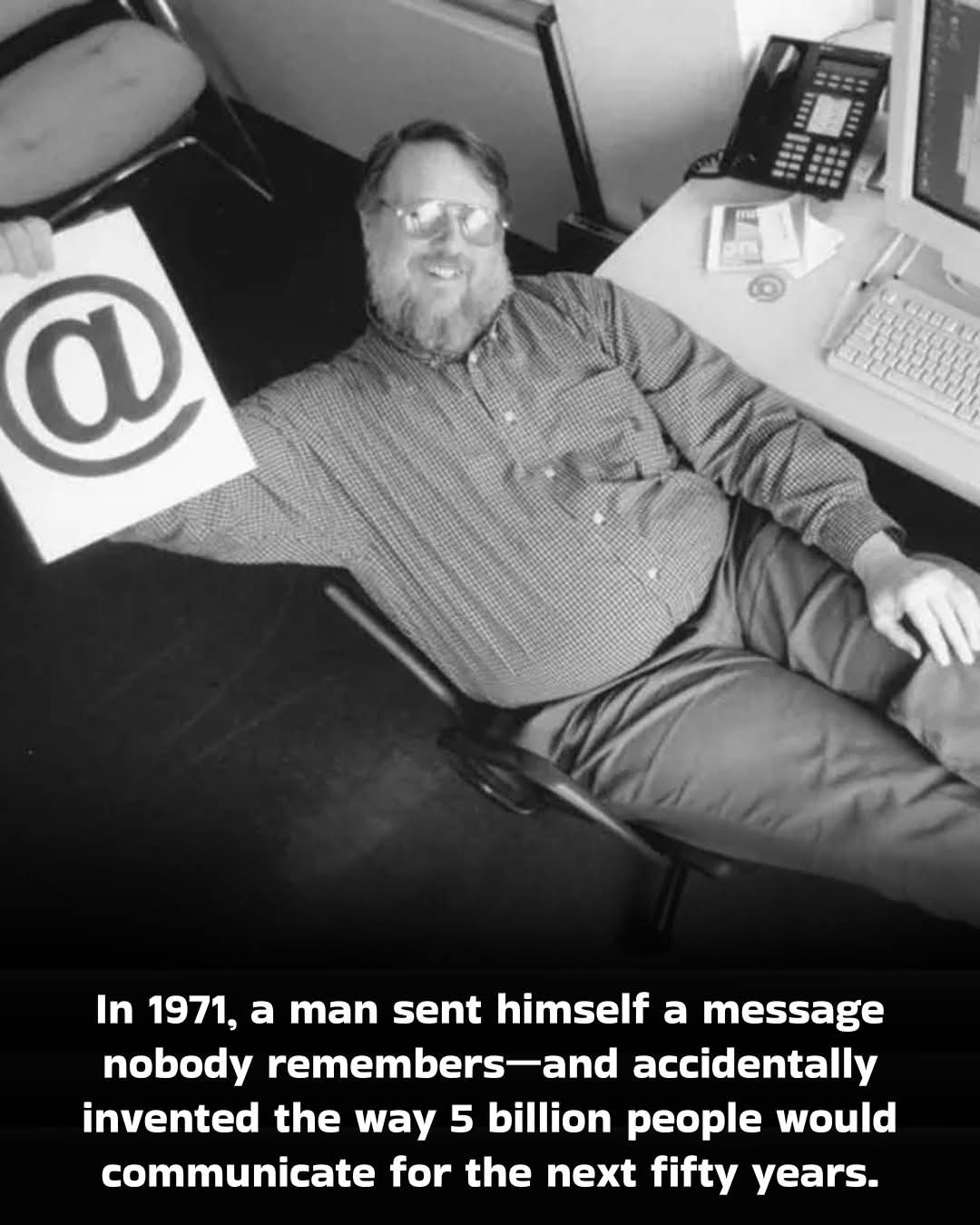
  • In 1971, a man sent himself a message nobody remembers—and accidentally invented the way 5 billion people would communicate for the next fifty years.
    Cambridge, Massachusetts. BBN Technologies. A basement lab filled with machines the size of refrigerators, humming and clicking, connected by wires to a strange new network called ARPANET.
    Ray Tomlinson sat alone.
    He was a 29-year-old computer engineer working on a problem nobody had asked him to solve. ARPANET already allowed people to leave messages on shared computers—but only if you shared the same machine. If you wanted to send a note to someone using a different computer, you were out of luck.
    Ray thought that was silly.
    So he started tinkering. Not because his boss told him to. Not because there was funding or a deadline. Just because it seemed like something the network should be able to do.
    He wrote a program called SNDMSG—"send message"—that could transfer a text file from one computer to another across the network. It worked. But there was a problem.
    How do you tell the computer where to send the message?
    You needed a way to separate the person's name from the machine's name. Something clear. Something simple. Something that wouldn't confuse the computer.
    Ray looked at his Model 33 Teletype keyboard. Most keys were letters or numbers. Punctuation was sparse. But there, on the upper row, sat a symbol almost nobody used.
    @
    It was an accounting symbol—shorthand for "at the rate of" when calculating prices. It had survived on keyboards mostly out of habit. Ray figured nobody would miss it.
    He made a decision in seconds that would shape the next half-century of human communication.
    Username @ Computer Name.
    Simple. Elegant. Permanent.
    He typed a test message. Something forgettable—probably "QWERTYUIOP" or another string of random characters. He sent it from one machine to another, both sitting in the same room, connected through ARPANET's sprawling network.
    It worked.
    Ray sent the first networked email. To himself. In an empty lab. With no witnesses.
    He later couldn't even remember what the message said. "Entirely forgettable," he called it.
    But what happened next wasn't forgettable at all.
    Within weeks, ARPANET engineers started using Ray's system. Within months, email accounted for 75% of all traffic on the network. People who'd been sending memos and making phone calls suddenly had a faster, quieter, more efficient way to communicate.
    They loved it.
    By the 1980s, email spread beyond research labs into universities, corporations, and eventually homes. By the 1990s, it was everywhere. The @ symbol—Ray's casual choice from a forgotten accounting character—became one of the most recognized symbols on Earth.
    Today, over 330 billion emails are sent every day. That's 3.8 million per second.
    Email created entire industries: marketing automation, cybersecurity, productivity software, spam filters, customer service platforms. Careers were built on it. Relationships formed through it. Revolutions organized with it.
    And Ray Tomlinson never tried to own it.
    He didn't patent email. Didn't trademark the @ symbol. Didn't start a company or demand royalties. He was an engineer, not an entrepreneur. He built it because the problem was there, and solving problems was what he did.
    In 2012, Google invited Ray to their headquarters to celebrate the 40th anniversary of email. They gave him a cake shaped like an @ symbol. He seemed slightly embarrassed by the attention.
    When reporters asked him about inventing email, he downplayed it. "I just happened to be in the right place at the right time," he said. "It was a fairly obvious thing to do."
    To Ray, it wasn't a revolution. It was just good engineering.
    In 2016, Ray Tomlinson died of a heart attack at seventy-four. Gmail's official Twitter account posted a tribute: "Thank you, Ray Tomlinson, for inventing email and putting the @ sign on the map."
    Millions of people saw it. Most had no idea who he was.
    Because Ray never became famous. He never gave a TED talk or wrote a bestselling memoir. He never became a billionaire or household name. He lived quietly, worked on projects that interested him, and died having changed the world in ways most people never realized.
    Think about that.
    Every email you've ever sent—job applications, love letters, meeting invites, password resets, breakup messages, acceptance letters, apologies, thank-yous, spam about discounted furniture—all of them carry the ghost of Ray's decision in 1971.
    That @ symbol you type without thinking? Ray chose it in seconds, alone in a lab, solving a problem nobody had asked him to solve.
    No venture capital. No product launch. No press release. Just an engineer noticing something missing and quietly building it into existence.
    The world celebrates founders who raise millions and disrupt industries. We make documentaries about visionaries who change everything with bold speeches and flashy keynotes.
    But some of the most important revolutions happen in silence.
    One man. One keyboard. One overlooked symbol. One message sent to himself that nobody remembers.
    And suddenly, billions of people had a way to say: I'm here. Are you there?
    Ray Tomlinson didn't change the world by shouting. He changed it by typing.
    And fifty years later, we're still using the language he invented—one @ at a time.
    In 1971, a man sent himself a message nobody remembers—and accidentally invented the way 5 billion people would communicate for the next fifty years. Cambridge, Massachusetts. BBN Technologies. A basement lab filled with machines the size of refrigerators, humming and clicking, connected by wires to a strange new network called ARPANET. Ray Tomlinson sat alone. He was a 29-year-old computer engineer working on a problem nobody had asked him to solve. ARPANET already allowed people to leave messages on shared computers—but only if you shared the same machine. If you wanted to send a note to someone using a different computer, you were out of luck. Ray thought that was silly. So he started tinkering. Not because his boss told him to. Not because there was funding or a deadline. Just because it seemed like something the network should be able to do. He wrote a program called SNDMSG—"send message"—that could transfer a text file from one computer to another across the network. It worked. But there was a problem. How do you tell the computer where to send the message? You needed a way to separate the person's name from the machine's name. Something clear. Something simple. Something that wouldn't confuse the computer. Ray looked at his Model 33 Teletype keyboard. Most keys were letters or numbers. Punctuation was sparse. But there, on the upper row, sat a symbol almost nobody used. @ It was an accounting symbol—shorthand for "at the rate of" when calculating prices. It had survived on keyboards mostly out of habit. Ray figured nobody would miss it. He made a decision in seconds that would shape the next half-century of human communication. Username @ Computer Name. Simple. Elegant. Permanent. He typed a test message. Something forgettable—probably "QWERTYUIOP" or another string of random characters. He sent it from one machine to another, both sitting in the same room, connected through ARPANET's sprawling network. It worked. Ray sent the first networked email. To himself. In an empty lab. With no witnesses. He later couldn't even remember what the message said. "Entirely forgettable," he called it. But what happened next wasn't forgettable at all. Within weeks, ARPANET engineers started using Ray's system. Within months, email accounted for 75% of all traffic on the network. People who'd been sending memos and making phone calls suddenly had a faster, quieter, more efficient way to communicate. They loved it. By the 1980s, email spread beyond research labs into universities, corporations, and eventually homes. By the 1990s, it was everywhere. The @ symbol—Ray's casual choice from a forgotten accounting character—became one of the most recognized symbols on Earth. Today, over 330 billion emails are sent every day. That's 3.8 million per second. Email created entire industries: marketing automation, cybersecurity, productivity software, spam filters, customer service platforms. Careers were built on it. Relationships formed through it. Revolutions organized with it. And Ray Tomlinson never tried to own it. He didn't patent email. Didn't trademark the @ symbol. Didn't start a company or demand royalties. He was an engineer, not an entrepreneur. He built it because the problem was there, and solving problems was what he did. In 2012, Google invited Ray to their headquarters to celebrate the 40th anniversary of email. They gave him a cake shaped like an @ symbol. He seemed slightly embarrassed by the attention. When reporters asked him about inventing email, he downplayed it. "I just happened to be in the right place at the right time," he said. "It was a fairly obvious thing to do." To Ray, it wasn't a revolution. It was just good engineering. In 2016, Ray Tomlinson died of a heart attack at seventy-four. Gmail's official Twitter account posted a tribute: "Thank you, Ray Tomlinson, for inventing email and putting the @ sign on the map." Millions of people saw it. Most had no idea who he was. Because Ray never became famous. He never gave a TED talk or wrote a bestselling memoir. He never became a billionaire or household name. He lived quietly, worked on projects that interested him, and died having changed the world in ways most people never realized. Think about that. Every email you've ever sent—job applications, love letters, meeting invites, password resets, breakup messages, acceptance letters, apologies, thank-yous, spam about discounted furniture—all of them carry the ghost of Ray's decision in 1971. That @ symbol you type without thinking? Ray chose it in seconds, alone in a lab, solving a problem nobody had asked him to solve. No venture capital. No product launch. No press release. Just an engineer noticing something missing and quietly building it into existence. The world celebrates founders who raise millions and disrupt industries. We make documentaries about visionaries who change everything with bold speeches and flashy keynotes. But some of the most important revolutions happen in silence. One man. One keyboard. One overlooked symbol. One message sent to himself that nobody remembers. And suddenly, billions of people had a way to say: I'm here. Are you there? Ray Tomlinson didn't change the world by shouting. He changed it by typing. And fifty years later, we're still using the language he invented—one @ at a time.
    0 Reacties 0 aandelen 764 Views
  • Womens Silver Jewlery $8 per gram.ram. Used
    $8
    In stock
    Shelby Township, MI, USA
    Women's sterling silver jewelery/ bracelets, rings, necklaces, charms, pandora, and watches for both men and ladies/ MK, Fendi, Gucci, Citizens. Its sold by the gram, the sterling silver, and I am a cash only seller. Or Zelle. Exchanges are always at the Shelby Twp Police Dept. Shipping is available, but prefer to meet if in my area. TYIA for looking.
    Women's sterling silver jewelery/ bracelets, rings, necklaces, charms, pandora, and watches for both men and ladies/ MK, Fendi, Gucci, Citizens. Its sold by the gram, the sterling silver, and I am a cash only seller. Or Zelle. Exchanges are always at the Shelby Twp Police Dept. Shipping is available, but prefer to meet if in my area. TYIA for looking.
    Love
    1
    0 Reacties 0 aandelen 900 Views
  • #everpowerfule #womensjewlery #bling #sterlingsilver #sell #slayallday #justdoit PM me with questions. I will ship but you must follow instructions of my terms. TYIA Eric
    #everpowerfule #womensjewlery #bling #sterlingsilver #sell #slayallday #justdoit PM me with questions. I will ship but you must follow instructions of my terms. TYIA Eric
    Like
    1
    1 Reacties 0 aandelen 810 Views
  • I sell women’s jewelry. Sterling silver is my jam. Stop by n shop with me if you can. Tyvm. #everpowerfule #silverjewlery #igotthehookup #slayallday
    I sell women’s jewelry. Sterling silver is my jam. Stop by n shop with me if you can. Tyvm. #everpowerfule #silverjewlery #igotthehookup #slayallday
    Wow
    Like
    3
    0 Reacties 0 aandelen 1K Views
  • Silver women’s jewelry Used
    $6
    In stock
    Shelby twp Michigan 48317
    Hello! I sell
    Women’s silver .925 stamped jewelry. Rings, bracelets, necklaces, and other accessories. All stamped and the real deal. I also sell watches. $6 per gram on any sterling silver item. Watch prices differ.
    Pm me for quotes and information. Tyia.
    Hello! I sell Women’s silver .925 stamped jewelry. Rings, bracelets, necklaces, and other accessories. All stamped and the real deal. I also sell watches. $6 per gram on any sterling silver item. Watch prices differ. Pm me for quotes and information. Tyia.
    Love
    Like
    3
    4 Reacties 0 aandelen 1K Views
  • #everpowerfule #silverjewlery #seller #turquiose #watches #pmme


    I sell ladies silver jewelry. I’m a cash only seller and exchanges are done at the police department in Shelby twp Mi. 48317

    I do ship on occasion. Pm me for info. Or email me at Everpowerful@att.net with questions about my items. Send me a picture of it and I’ll quote it.

    Tyia.


    E
    #everpowerfule #silverjewlery #seller #turquiose #watches #pmme I sell ladies silver jewelry. I’m a cash only seller and exchanges are done at the police department in Shelby twp Mi. 48317 I do ship on occasion. Pm me for info. Or email me at Everpowerful@att.net with questions about my items. Send me a picture of it and I’ll quote it. Tyia. E
    Love
    1
    0 Reacties 0 aandelen 2K Views
  • Big News in the Crypto World:
    The Office of the Comptroller of the Currency (OCC) released an Interpretive Letter confirming that U.S. national banks may engage in riskless principal crypto-asset transactions. This means banks can act as intermediaries by simultaneously buying and selling crypto with two customers without holding the assets in inventory, essentially acting as a broker-agent. This is seen as a significant step in clarifying regulated bank involvement in cypto markets. [Source link in comments]
    Big News in the Crypto World: The Office of the Comptroller of the Currency (OCC) released an Interpretive Letter confirming that U.S. national banks may engage in riskless principal crypto-asset transactions. This means banks can act as intermediaries by simultaneously buying and selling crypto with two customers without holding the assets in inventory, essentially acting as a broker-agent. This is seen as a significant step in clarifying regulated bank involvement in cypto markets. [Source link in comments]
    Love
    1
    2 Reacties 0 aandelen 799 Views